


Kinder to Your Blood Pressure
In a meta-analysis of clinical trials, black seed lowered systolic blood pressure by about 3 mmHg and diastolic by 2.7 mmHg, with no medication involved.
See the proof

The little black seed, honoured for centuries — now pressed pure. Cold-pressed Habbatus Sauda (Nigella sativa) oil from Türkiye: thick, bold and peppery, never refined or watered down. Pressed without heat to protect the thymoquinone — black seed's most-studied compound, independently measured in ours at a high ~1.8%. Lab-tested, halal and organic. Just half a teaspoon a day, the way it's always been taken.
Couldn't load pickup availability
Half a teaspoon (about 2.5ml) once a day — many take it neat first thing in the morning. If the peppery kick is strong, stir it into a spoon of honey, warm water or juice, or take it with food. It's a food supplement for everyday wellbeing, not a medicine: because black seed oil may gently lower blood pressure and blood sugar and can affect blood clotting, check with your doctor first if you take medication for blood pressure, diabetes or blood-thinning, are pregnant or breastfeeding, or are due for surgery. Keep out of reach of young children.
Black seed oil is meant to be bold. Expect a thick, golden-brown oil with a sharp, peppery, slightly bitter warmth — closer to a spice than a salad oil. That kick is the mark of a real, cold-pressed, unrefined oil; a smooth or tasteless “black seed oil” has usually been diluted or refined. Take it neat, or stir it into honey, warm water or juice to soften the edge.
Keep the bottle tightly closed in a cool, dark place, away from direct sunlight and heat — light and warmth slowly tire a cold-pressed oil. No need to refrigerate. Best used within a few months of opening, while the aroma is at its liveliest.
Sizes
50ml
Origin
Single origin, Türkiye
Extraction
Cold-pressed, unrefined
Thymoquinone
~1.8% (independently measured)
Ingredients
100% black seed oil (Nigella sativa)
Serving
½ teaspoon (2.5ml) a day
Certification
Halal · Organic · Turkish Ministry approved · lab-analysed (Turkey + UNIPEQ, UKM)
We ship within 5 business days; how quickly it arrives depends on the option you choose at checkout.
If it's not for you, email salam@sihate.com within 30 days for a full refund, no questions asked. That's our 30-day money-back guarantee.


Pure organic ingredients from trusted farms for everyday nutrition.

Each batch is tested twice through certified labs in Türkiye and Malaysia.

Experts review purity and origin to ensure consistent product quality.

Inspired by Quranic nutrition and backed by modern scientific research.


Black seed's most-studied compound and natural antioxidant, measured in ours at a high ~1.8%.
The essential fat that makes up most of the oil, one the body simply can't make on its own.
The same stable, heart-friendly fat that gives good olive oil its staying power in the pan.
Natural plant compounds, led by beta-sitosterol, found right the way through the black seed.
A natural antioxidant that's already in the oil, part of what keeps it fresh in the bottle.
The aromatic compounds behind black seed's bold, peppery and unmistakable spice-like kick.

“In the black seed is healing for every disease, except death.”
Prophet Muhammad (PBUH) · Sunan Ibn Majah 3319, Sahih
Honoured for centuries as a remedy. And today, trial after trial keeps finding out why.
In a meta-analysis of clinical trials, black seed lowered systolic blood pressure by about 3 mmHg and diastolic by 2.7 mmHg, with no medication involved.
See the proofAcross 11 trials in prediabetes and type-2 diabetes, black seed significantly lowered both fasting glucose and long-term HbA1c alongside usual care.
See the proofPooling 34 trials in 2,278 people, a meta-analysis found black seed lowered both LDL and total cholesterol, the numbers doctors watch, versus control.
See the proofA meta-analysis of four trials found black seed improved asthma-control scores and lung function when taken alongside people's usual inhaler care.
See the proofAcross 16 trials in 1,033 people, black seed raised the body's total antioxidant capacity and lowered a key marker of everyday oxidative stress.
See the proofA 2024 review of eight trials found black seed eased nasal symptoms and improved overall response in people living with allergic rhinitis.
See the proofIn that same 34-trial meta-analysis, black seed significantly reduced blood triglycerides, another blood fat tied to heart health, against control.
See the proofA meta-analysis of 13 trials in 875 adults found black seed trimmed body weight by roughly 1.8 kg and nudged BMI down, a gentle helping hand.
See the proofA meta-analysis found black seed lowered C-reactive protein, a key marker of inflammation, most clearly in adults carrying a little extra weight.
See the proofIn fatty-liver trials, black seed improved the ALT and AST liver enzymes and eased fatty liver, lightening the load on a hard-working organ.
See the proofFOOD, NOT MEDICINE: This is a food meant to be enjoyed as part of everyday life. The results of consuming it vary from person to person, and depend on how it is used, your lifestyle, and other factors.
A 0.5% oil versus a 1.8% oil is more than three times the active compound in the very same spoon. Many cheap oils sit near 0.5%, or don't say at all.
Thymoquinone is the compound the science is mostly about — the natural antioxidant that makes black seed worth taking. And the percentage matters more than people realise.
Two bottles can both say “a spoon a day” and deliver completely different amounts of it: a 0.5% oil versus a 1.8% oil is more than three times the active compound in the very same spoon. Ours is measured, not guessed, at a high ~1.8%.
| Sign | Genuine, cold-pressed | Diluted or refined |
|---|---|---|
| Colour | Dark amber-brown | Pale, clear |
| Texture | Thick, coats the spoon | Thin, watery |
| Smell & taste | Peppery, bitter bite | Mild, bland or sweet |
| Ingredients | One: black seed oil | Blended, cheaper oils |
| Proof | Lab-tested, ~1.8% TQ | None disclosed |
It's the first thing worth asking, because the market earns the suspicion — a lot of “black seed oil” is quietly cut with cheaper oils, or refined until it's pale and mild. Real cold-pressed oil is the opposite: dark, thick, and unmistakably peppery, with a bitter little bite.
Those are good first clues, but they aren't proof — only a lab is. Ours is independently measured at ~1.8% thymoquinone, approved in Türkiye and analysed on two continents. Here's how the real thing compares to the watered-down kind.
It's fat-soluble, so taking it with a meal helps it absorb and sits easier on the stomach. Consistency matters more than the exact hour.
We won't pretend it's smooth — real black seed oil is bold, peppery and a little bitter, and that bite is a sign of a potent, unrefined oil, not a fault. The good news is it's easy to tame.
Take your half-teaspoon with or just after food, and chase it with honey, a little juice, or a spoon of yoghurt. Most people find they've completely adapted within a week or two.
This is a “check first,” not a “don't” — most people are perfectly fine. Keep it out of reach of young children.
For most healthy adults, a daily half-teaspoon is a gentle, food-level amount. But we'd always rather you were careful than casual — black seed oil can nudge blood pressure and blood sugar down, and have a mild effect on blood clotting.
So it's a “check first,” not a “don't.” If any of these are you, a quick word with your doctor before starting is the sensible move.
| Attribute | Cold-pressed | Solvent-refined |
|---|---|---|
| Heat & chemicals | None, pressure only | Hexane & heat |
| Thymoquinone | Kept in | Much of it lost |
| Colour & aroma | Dark, aromatic | Pale, neutral |
| Yield & cost | Low yield, costlier | High yield, cheap |
More than you'd think, and it's the quiet difference between a real oil and a weak one. Cold pressing squeezes the seed with pressure alone, no heat and no chemicals, which keeps the thymoquinone and the aroma intact.
Solvent refining is cheaper and squeezes out more oil, but heat and chemicals strip much of the thymoquinone away and leave something paler, milder and weaker. Ours is only ever cold-pressed.
You can, and plenty of people do. There's reasonable evidence it may help calm mild skin blemishes, and it's a popular addition to hair and scalp routines — a nice bonus alongside taking it daily.
One honest word of caution: patch-test a little on your inner arm first, since the oil itself can occasionally cause a rash. Think of skin and hair as a bonus use, not a treatment.
Both work; it really comes down to you. Liquid lets you see and taste the actual oil, control your dose, and use it in food or on skin — and tasting that peppery bite is its own little proof of quality.
Capsules are tasteless and travel-friendly, which suits anyone who can't get past the flavour. The absorption difference is small, so the honest answer is: pick whichever one you'll actually take every day.
Keep it sealed, cool and out of direct light — a cupboard is perfect, and the fridge stretches it further. Unopened it keeps well for a year or two; once opened, it's best enjoyed within six to twelve months, while the aroma is at its liveliest.
If the peppery smell ever turns sharp, metallic or “off,” that's rancidity — time for a fresh bottle.
We'll be honest: black seed oil is a slow, steady habit, not an overnight fix. Some people notice small everyday comforts within days, but most of what the studies show builds over roughly eight to twelve weeks of daily use.
And some people don't “feel” anything obvious at all — because a lot of the good it does is quiet and preventative. Consistency is what counts.
Halal and organic, yes to both — a single, pure ingredient with nothing added. On cooking, though, one tip: don't fry or bake with it. High heat undoes the very thymoquinone you're paying for.
Instead, take it as it is, or drizzle and stir it into food after cooking, or into honey and warm (not hot) drinks. Cool keeps it potent.
Take theirs.

Chemistry Expert, UKM

Quranic Food Scholar, UKM

Professional Chef

Medical Doctor, USM

Muay Thai Fighter, ONE Championship

Scientist, GENOM Malaysia

TV & Radio Personality

Islamic Media Personality

TV Host & Broadcaster
Sihaté has become part of everyday life in homes nationwide. Honest, natural products that help real families live a little healthier, together.


Dah beli byk kali daripada Sihaté ni dan delivery sangat cepat. Saya bagi anak saya ni spray 3 kali je, alhamdulillah jarang sakit..
Brg dah selamat smpai x sempat nak rate. Guna mnyk ni utk sapu dekat dada dan belakang anak time selsema batuk. Alhamdulillah membantu sgt










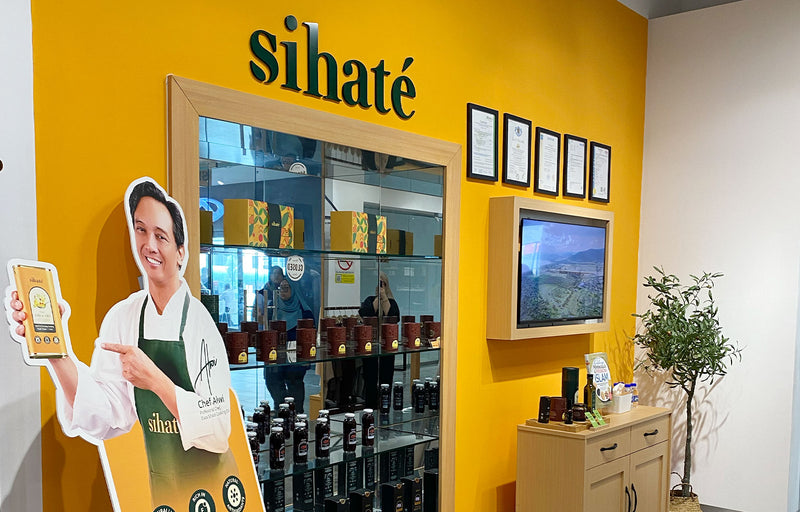
UG-02, Sunway Gandaria, 2, Jalan Pusat Bandar, Seksyen 9, 43650 Bandar Baru Bangi, Selangor.
Hours: 10am - 7pm
Phone: +6010-959 8779
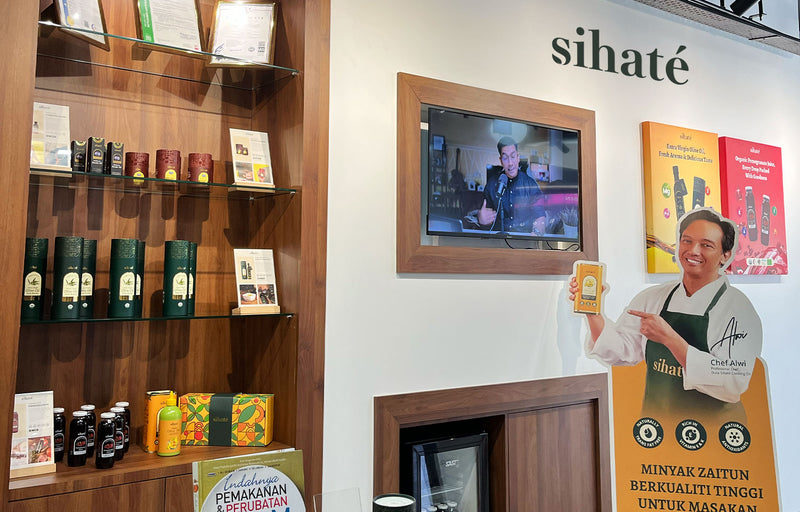
Jalan Melati Utama 4, Taman Melati Utama, 53100 Kuala Lumpur, Wilayah Persekutuan Kuala Lumpur.
Hours: 10am - 10pm
Phone: +6011-6063 8779
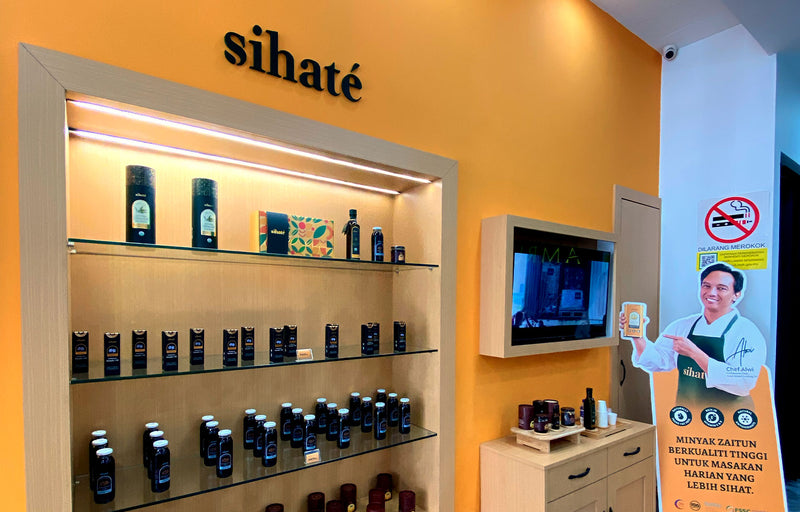
Pusat Komersial, 31, Jalan Plumbum P7/P, Seksyen 7, 40000 Shah Alam, Selangor.
Hours: 10am - 7pm
Phone: +6014-364 5611
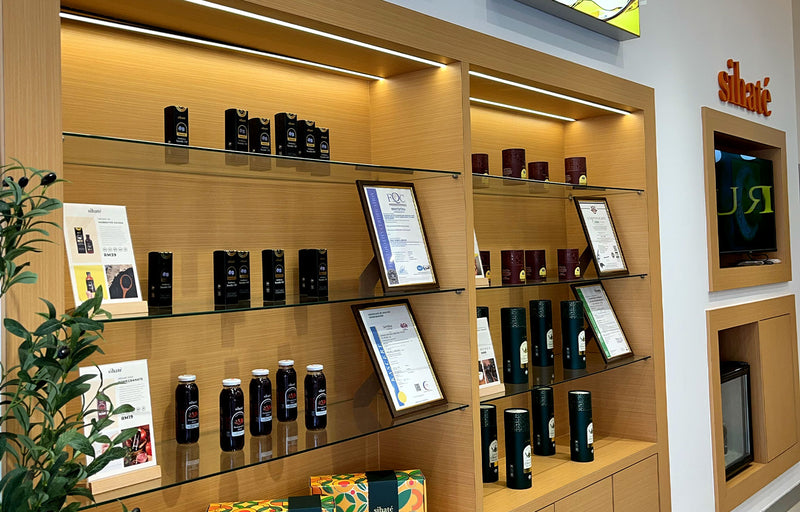
3B, 26, Persiaran Eco Grandeur 1, 42300 Puncak Alam, Selangor.
Hours: 10am - 7pm
Phone: +6012-956 8779
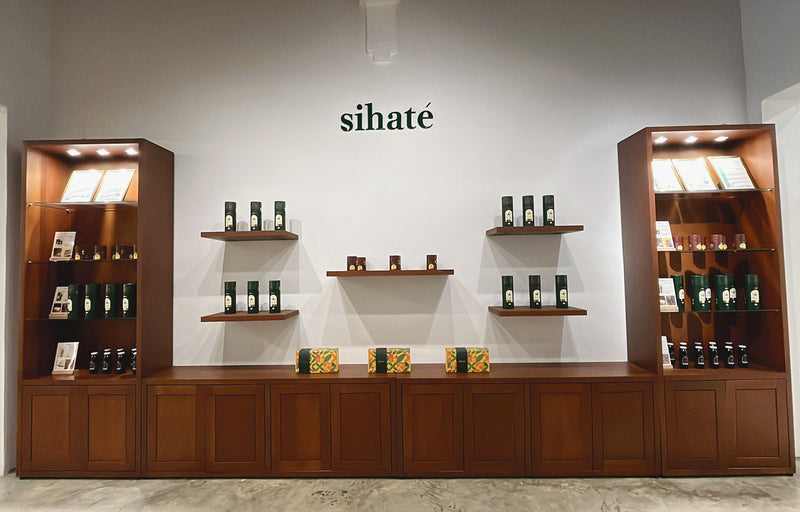
782-J, Jalan Temenggong, Bandar Kota Bharu, 15000 Kota Bharu, Kelantan.
Hours: 10am - 7pm
Phone: +6011-6117 8779

PT 3925-1-1 Taqwa A1, Bandar Satelit Islam, Pasir Tumbuh, 16150 Kota Bharu, Kelantan.
Hours: 9 am - 6 pm (Close Friday)
Phone: +6011-5406 5456
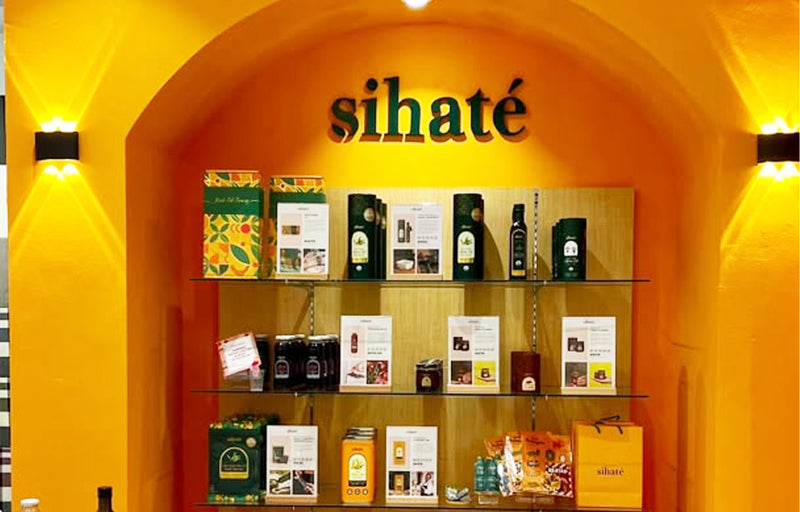
15-01, Jalan Padi Emas 1/5, Bandar Baru Uda, 81200 Johor Bahru, Johor.
Hours: 10am - 7pm
Phone: +6011-6513 8779


